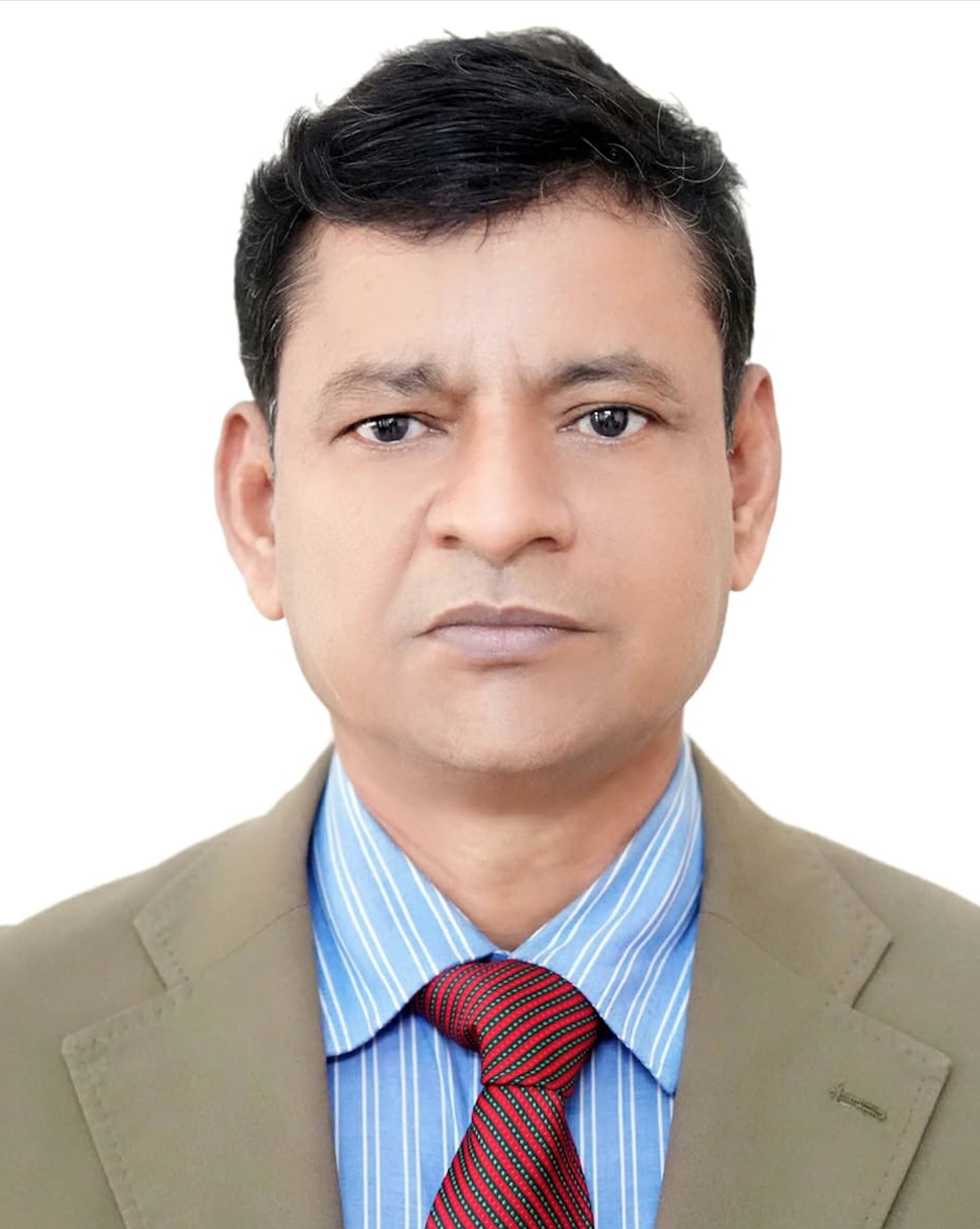
|
Full Time Faculty Phone: +880-2-55668200 Ext: 1907 |
I carried out the research on bio-monitoring system using heliozoa Raphidiophrys; Ecological monitoring has been given increasing attention because of the potential establishment of a correlation between the chemical nature of the pollutant and its biological effects. Organisms including plants, animals, heliozoa and microorganisms have been adopted in biomonitoring programm’s. We know protozoa are cosmopolitan eukaryotic microorganism. Heliozoon Raphidiophrys contractilis is used as a model organism for the biomonitoring; because the organism is very sensitive to any kind of environmental stresses or changes and shows axopodial shortening as one of the cellular response that can be easily detected by light microscopy.
I also carried out research on “Morphological analysis of intra-chloroplastic particles, which contain carbonic anhydrases, under changing light and dark condition.” in a marine diatom Phaeodactylum tricornutum at Kwansei Gakuin University, Japan. During my Ph. D. I carried out research on the toxic effect of heavy metal ions (Zn2+, Pb2+, Hg2+, Cu2+, As3+ and Cd2+) on the axopodia of heliozoon R. contractilis and the result published in the Journal of Environmental Sciences 13 (4), 193-200) entitled with “Axopodial degradation in the heliozoon R.contractilis: A novel bioassay system for detecting heavy metal toxicity in an aquatic environment.” I also found that “Axopodial contraction in the heliozoon R. contractilis requires extracellular Ca2+ and external stimuli” that published in Int. J. Zool. Sci., 20, 1367-1372, 2003. Effect of ruthenium red and gadolinium (Gd3+), a stretch activated ion channel blocker, on axopodial contraction in the heliozoon R. contractilis. Beside that I conducted research on depolymerization of microtubule by the effect of metal ions. Degradation of axopodia in the heliozoon R. contractilis, role of extracellular Ca2+ to induce microtubule depolymerization and polymerization i.e. how the extracellular Ca2+ play the role of microtubule depolymerization i.e. the involvement of voltage dependent Ca2+ channel in this cell type.
Publications:
Short communications:
1. Visiting Researcher, Kobe University, Japan. May 2012 to June 2012
2. Japan Student Services Organization (“JASSO”) Research Fellowship in Kobe University, Japan.
June 2011 - September 2011.
3. Postdoctoral Research Fellow, Department of Bioscience, School of Science and Technology,
Kwansei-Gakuin University, Japan. Under the support of grant for the University-Industry Joint Research
Project from Ministry of Education, Culture, Sports, Science and Technology (MEXT), Japan.
April 2006 - March 2007.
4. Ph.D. Fellowship from Ministry of Education, Culture, Sports, Science and Technology
(MONBUKAGAKUSHO) Japan. April 2003 - March, 2006.
5. M. S. Fellowship from the Ministry of Education, Culture, Sports, Science and Technology
(MONBUKAGAKUSHO) Japan. April 2001 - March 2003.
6. Research Fellowship from the Ministry of Education, Culture, Sports, Science and Technology
(MONBUKAGAKUSHO) Japan. October 2000 - March 2001.
Doctor of Philosophy (Ph. D.): Molecular Science, Department of Biology, Faculty of Molecular and Cellular Science, Graduate School of Science and Technology, Kobe University, Japan. March, 2006.
Master of Science (M. S.): Department of Biology, Faculty of Science, Kobe University, Kobe, Japan. March, 2003.
Research Student: Department of Biology, Faculty of Science, Kobe University, Kobe, Japan. October 2000 to March 2001.
Master of Science (M. Sc): Department of Botany, Faculty of Biological Science, University of Dhaka, Dhaka, Bangladesh, 1994.
Bachelor of Science (B. Sc. Hons): Department of Botany, Faculty of Biological Science, University of Dhaka, Dhaka, Bangladesh, 1992.
Higher Secondary Certificate: Science Group, Comilla Board, Chandpur Government College, Chandpur, Bangladesh. 1986.
Secondary School Certificate: Science Group, Comilla Board, Hajigonj Pilot High School, Hajigonj, Chandpur, Bangladesh; 1984.
February 2016-Till date: Professor, Department of Biology & Chemistry, North South University, Plot 15, Block B, Bashundhara R/A, Baridhara, Dhaka 1229, Bangladsesh
January 2014- January 2016: Associate Professor, Department of Biology & Chemistry, North South University, Plot 15, Block B, Bashundhara R/A, Baridhara, Dhaka 1229, Bangladsesh
December 2011- December 2014: Associate Professor, Department of Biochemistry & Microbiology, North South University, Plot 15, Block B, Bashundhara R/A, Baridhara, Dhaka 1229, Bangladsesh
April 2012- May 2012: Visiting Researcher, Department of Biology, Faculty of Science, Kobe University, Japan
May 2008- December 2011: Assistant Professor, Department of Life Sciences, North South University, Plot 15, Block B, Bashundhara R/A, Baridhara, Dhaka 1229, Bangladsesh.
June 2011- August 2011: Visiting Research Fellow, Kobe University, Japan, under JASSO fellowship.
April 2007- September 2007: Research Fellow (Postdoctoral), Department of Bioscience, School of Science and Technology, Kobe University, Japan. Conducted research on; Development of bio-monitoring system using unicellular heliozoon Raphidiophrys.
April 2006 – March 2007: Research Fellow (Postdoctoral), Department of Bioscience, School of Science and Technology, Kwansei Gakuin University, Japan. Conducted research on; Carbon Concentrating Mechanism; Morphological Analysis of Mitochondrial Carbonic Anhydrase2 in a marine diatom Phaeodactylum tricornutum.
April 2003 – March 2006: Ph. D. Fellow, Department of Molecular Science, Faculty of Molecular and Cellular Science, Graduate School of Science and Technology, Kobe University, Japan.
October 2000 – March 2001: Research Student, Department of Biology, Faculty of Science, Kobe University, Japan
May 1997 - October 2000: Worked as Officer Grade III-A (May 17, 1999 to October 20, 2000); Officer Grade III-B (May 17, 1998 to May 16, 1999) and Probationary Officer (May 17, 1997 to May 16, 1998) in the Credit Card Division of National Bank Limited.
Molecular Biology: PCR, Vector Construct, SDS-PAGE, Western Blotting, Electron Microscopy, Confocal Microscopy, Fluorescent Microscopy, Video Microscopy, Light Microscopy, Inverted Microscopy, Isolation of axopodia and nucleus, Western Blotting, Cell Model, Reactivation of Cell Model and other relevant techniques.
Cell Culture: Axenic culture of Raphidiophrys contractilis, Actinophrys sol, Phaeodactylum tricornutum Paramecium bursaria, Paramecium caudatum, Tetrahymena thermophila, Chlorogonium elongatum, Euglena gracilis and other ciliate and flagellate.
1. Member: Japan Society of Protozoology
2. Member: Zoological Society of Japan
3. Member: Botanical Society of Bangladesh
4. Life Member: Dhaka University Alumni Association
5. Life Member: (Sir) A. F. Rahman Hall (DU) Alumni Association
6. Life Member: Greater Comilla Zill Samittee
7. Member: Chandpur Zilla Samittee
Date of Birth: September 01, 1969
Father’s Name: Late Abdur Rahman Khan
Mother’s Name: Mrs. Ayesha Rahman
Residence Address: House N0 25/A-B, Apartment N0-11/A, Green Road, Dhaka-1205, Bangladesh.
Permanent Address: Village: Nischintapur, Post Office: Khilpara, Upazilla: Hajigonj, District:
Chandpur, Bangladesh. E-mail: [email protected] & [email protected]
Nationality: Bangladeshi (By Birth)
Language Proficiency: Bangla (Reading, Writing, Listening, Speaking), English (Reading, Writing, Listening, Speaking), Japanese; Reading (Hiragana & Katakana), Speaking and Listening.